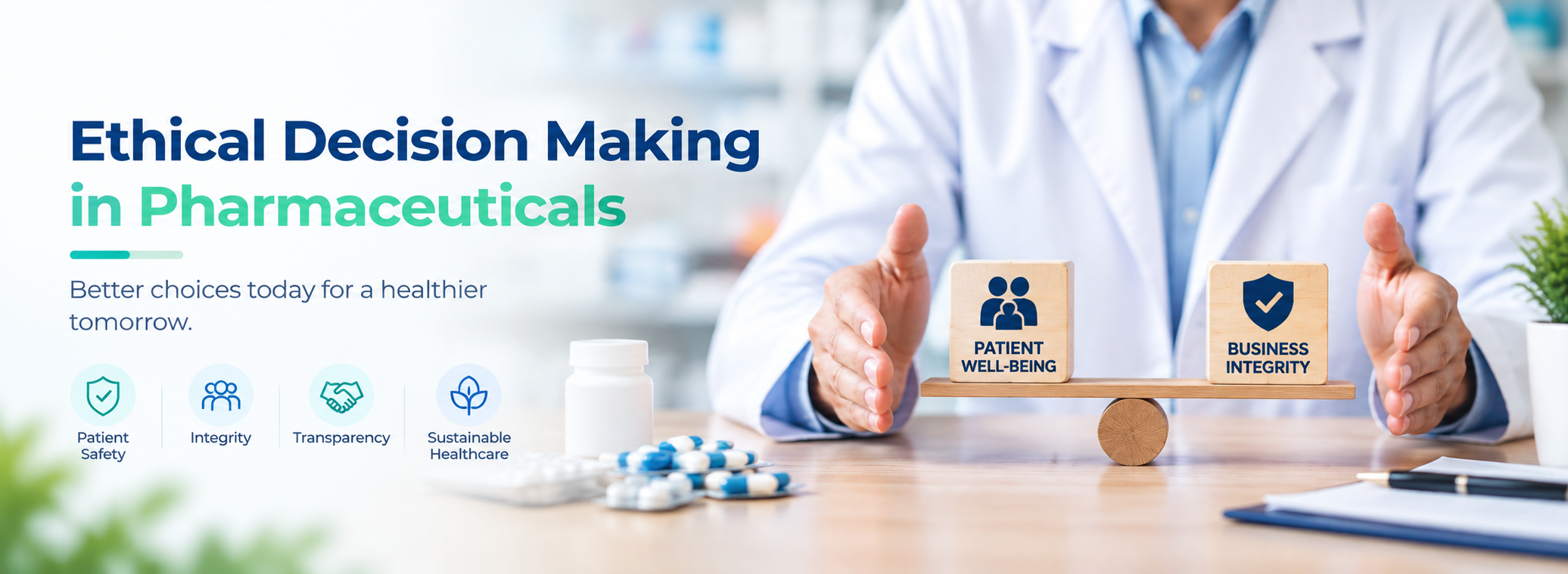
In the fast-paced world of pharmaceuticals, where scientific advancements can save lives and generate substantial profits, ethical decision-making plays a pivotal role. The pharmaceutical industry faces a constant dilemma between achieving financial success and prioritizing the well-being of patients and the wider society. In this blog, we will delve into the importance of ethical decision-making in the pharmaceutical sector and the key principles that guide it.
1. Patient-Centered Care:
Ethical decision-making in pharmaceuticals begins with a fundamental commitment to patient-centered care. Pharmaceutical companies must prioritize the safety, efficacy, and accessibility of their products. This means conducting rigorous clinical trials, ensuring that medications are affordable, and transparently disclosing potential risks and side effects to patients and healthcare providers.
2. Research Integrity:
The foundation of the pharmaceutical industry is research and development. Ethical practices demand that research is conducted with integrity and honesty. Fudging results, hiding adverse effects, or rushing products to market can have dire consequences. Upholding the highest standards of research ethics is paramount to ensure that medications are safe and effective.
3. Regulatory Compliance:
Pharmaceutical companies operate in a heavily regulated environment to ensure that their products meet safety and efficacy standards. Ethical decision-making involves strict compliance with all relevant regulations and guidelines. This includes obtaining proper approvals, accurately reporting data to regulatory agencies, and adhering to good manufacturing practices.
4. Pricing and Access:
One of the most significant ethical challenges in pharmaceuticals is pricing and access. Life-saving medications should be affordable and accessible to all who need them. Ethical pharmaceutical companies are committed to finding a balance between profit margins and affordability, offering assistance programs for low-income patients, and exploring innovative pricing models.
5. Corporate Social Responsibility (CSR):
Ethical pharmaceutical companies take their role in society seriously. They engage in CSR initiatives that extend beyond their core business activities. This might involve contributing to public health campaigns, supporting global efforts to combat diseases, or investing in sustainable and environmentally friendly practices.
6. Transparency and Accountability:
Transparency is a cornerstone of ethical decision-making. Pharmaceutical companies should openly communicate with the public, healthcare professionals, and stakeholders about their products, pricing, and business practices. Accountability means taking responsibility for any mistakes, addressing concerns, and continuously improving processes.
7. Ethical Sales and Marketing Practices:
Pharmaceutical companies should market their products honestly and ethically. This means avoiding aggressive sales tactics, providing accurate information to healthcare professionals, and refraining from misleading advertising that could lead to over-prescription or the use of unnecessary medications.
8. Research on Neglected Diseases:
Ethical pharmaceutical companies are committed to researching and developing medications for neglected diseases, even when the potential profits may be limited. This demonstrates a dedication to improving global health rather than solely focusing on lucrative markets.
In conclusion, ethical decision-making in the pharmaceutical industry is crucial for safeguarding public health and maintaining public trust. It involves patient-centered care, research integrity, regulatory compliance, fair pricing, corporate social responsibility, transparency, and accountability. Pharmaceutical companies that prioritize ethics alongside profitability can make a significant positive impact on society while also thriving in the competitive marketplace.